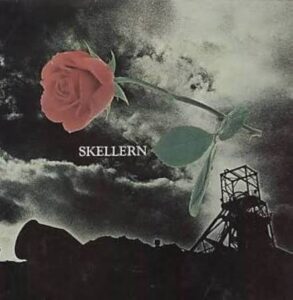
Is the 1978 offering from Peter Skellern the sweetest thing? Or are those sweet words all lies? Shall we find out?
You And I
Like Lose Again on Linda Ronstadt’s Hasten Down The Wind, Peter Skellern is right in the thick of the action with the first track on his imaginatively-monikered album, Skellern. “You may ask me if I’m happy,” he instantly warbles in that distinctively cultured quaver. “More than this, I can say.” It’s as if the record’s begun halfway through the track and we’ve just joined it.
A lot of the albums in this blog will remember my childhood days of listening to and discovering new music. I can vividly recall Dad giving Mum this album as a Christmas present in 1978 – only days after giving her vinyl copies of The Manhattan Transfer’s Pastiche and Gordon Lightfoot’s Early Lightfoot for her birthday. I didn’t quite know what to make of it when I heard it as a four-year-old, but something about it fascinated me. That unusual mix of piano, brass band and softly-sung vocal. Mum and Dad had many records in their collection, which I’d grown to know and love, but this wasn’t like anything I’d heard before. But I knew that despite being a bit of an oddity, I quite liked it.
When I Got You
Peter Skellern, then. He’d had previous chart success, firstly with You’re A Lady in 1972, which runs along the lines of this album – a retro, brass band-driven slice of wistful nostalgia. And secondly, with Hold On To Love in 1975, which – despite the multi-tracked vocals – doesn’t run along the lines of this album, instead opting for a mildly disco mid-range groove.
He later founded Oasis – not that one – with Julian Lloyd Webber and singer, Mary Hopkin, and in his later years (before he became a priest and a deacon), he worked extensively with Finders Keepers quizmaster, Richard Stilgoe. Alas, no rhyming couplets about battleships-playing schoolkids were ever released.
His 1978 album is a strange beast, combining nostalgia, heavy use of brass and the odd dash of pop. I say, heavy use of brass, it’s a dominant feature of Skellern. The Grimethorpe Colliery Band’s “musicianship is an example to us all” says Skellern on the back cover of the album, and if that’s maybe overstating the case a little, they do earn their pay packets on this jaunty little number. I love the instrumental break when they parp on one side of the stereo and then the other.
Like on You And I, Peter’s clearly smitten with his gal, only here, he’s in much more upbeat mood. It’s not one to play at the local disco for sure, and if you did, you’d probably be chucked out on to the street in a fit of pique – but in the comfort of your own home, it’s a snappy, catchy ditty that lasts.
Big ‘G’
I don’t know who or what Big ‘G’ is. A tribute to the musical note? A special dedication to big old Mr Greedy from the Mr Men books? An homage to a record-breaking slab of Gorgonzola cheese? The mystery remains.
This is another corker, an instrumental track – save for some harmonic scatting from Skellern – that rumbles along like an old steam train. I’m picturing this being set to some period drama of the ’20s or ’30s, when a vintage vehicle chuffs along, smoke billowing, on a country track. A great showcase for all the band, with spotlights for horns, trumpets and trombones – and also a bonus string guitar solo from Kevin Peek. All told, very enjoyable.
T’s All ‘Cos O’ You
When I was growing up, me and my sister Emma had this running gag between us about who sang the theme tune to Brush Strokes. I was adamant that it was Dexy’s Midnight Runners, Em was insistent that it was Peter Skellern. “But Peter Skellern sang the theme tune to Me And My Girl, that comedy with Richard O’Sullivan,” I’d ineffectually protest.
I can see where Em was coming from though. T’s All ‘Cos O’ You even has that same slow bounce of a rhythm – even if it’s more quietly menacing than the Dexy’s track. The Grimethorpers instantly make their presence felt, blaring brass into your ears at top volume in the intro, before Peter wearily hurls accusations at his cheating wrongdoer. “All washed up,” he complains. “Beat, bushed and blue.” Not only is he washed up, Skellern is chewed up and screwed up, thus giving a Midsomer Murders writer three potential demises for the price of one.
Another highlight of the album, as it slowly builds in atmosphere, culminating in one angry last burst of brass. Although, I don’t think I’ll ever win the argument about Dexy’s Midnight Runners actually singing Because Of You. Ever.
While I’m Away
A nice contrast to the quiet rage on Not-Jacko-Theme-Tune, this is another good showcase for guitarist Kevin Peek, who effectively turns in a two-hander with Skellern on the ivories. Peek’s evocative string guitar solo at the end of each verse adds an extra bit of desolation to the singer missing his other half. Like Jethro Tull’s Reasons For Waiting, you can read it as one of those period wartime romances when a soldier would tell his wife or girlfriend to think of him all those millions of miles away.
Kevin Peek incidentally would go on to join the prog band Sky along with John Williams and Herbie Flowers. They would enjoy considerable album success with their eponymous offerings and a Top 10 hit with Toccata in Spring 1980.
Love Is The Sweetest Thing
That eerie girl choir sounds quite unorthodox in the intro. It sounds like one singer that’s dubbed her voice like a thousand times. I mentioned Mary Hopkin earlier, and come to think of it, the voices do sound a bit like her – but there’s nothing on the web to confirm this. Either that or Skellern was at the helium.
It’s a jarring hello to what’s otherwise a pleasant enough interpretation of the old Ray Noble chestnut. Love Is The Sweetest Thing was released as a single in Autumn 1978, but couldn’t manage a higher chart position than Number 60. In a sea of disco, new wave punk and Olivia Newton-Johns & John Travoltas, it was inevitable that this comparatively old-fashioned throwback got lost in the tide.
Sweet Words
A gently weary tale of woe in which Skellern muses that his missus was “true perfection” with “silken hair and dark eyes”. But while she promised love in his direction, all her “sweet words were all lies”.
Like While I’m Away, this cuts down on the brass, and benefits from both a Peek string acoustic guitar solo and also a charmingly out of place electric piano accompaniment in the middle. One of my favourite picks on an album that on the whole, I’m greatly enjoying revisiting.
When Somebody Thinks You’re Wonderful
On the other hand, this is maybe a bit too saccharine for my tastes. Fats Waller and his Rhythm first did this in 1936, but Skellern’s version treads a fine line between amiable and twee. I’m not quite sure where it lands, although the chirping birdsong in the intro doesn’t do it any favours. What did he do, record the track in an aviary?
To help promote the album, Skellern appeared on a late-night ITV entertainment showcase called The Entertainers only a day or so before the album’s release. I’m not sure that this appearance was any help, given that it was on at about 11.45 pm, when Skellern’s target audience were probably snugly tucked up in bed. Other stars to appear on The Entertainers included Berni Flint, Ralph McTell and Alan Price.
Put Out The Flame
A haunting ballad lamenting the final embers of a once-ablaze love affair. This was actually released as a single at the end of 1977, but nothing came of this.
The stark arrangement again includes some excellent bass work from Lennie Bush. I could be wrong, but it sounds like he’s playing a genuine double bass, which only adds to the downbeat feel. Kevin Peek’s guitar work adds subtle support, and as with Love Is The Sweetest Thing, those eerie female/helium (delete as applicable) back-up vocals make the whole experience positively ghostly. By the time the track’s finished, there’s a notable chill in the air.
Which on a boiling hot day like today is just what I need.
Where Do We Go From Here
If the album opened with brazen optimism, it ends with pessimistic doubt. It’s amazing how a brass band can go from sounding like there’s not a care in the world to the sounding like that whole world’s come crashing down around your shoulders. The instrumental bit sounds like the Hovis version of the apocalypse.
The Skellern album barely troubled the charts, only mustering a Number 48 position in a blink-and-it’s-gone two-week stay (and even then, there was a seven-month gap between chart visits). But for me, I have fond memories of hearing this as a kid, and even without those rose-tinted glasses, it’s a successful break from the late ’70s chart norm. I have a sneaking suspicion that I once read that Housemartins/Beautiful South guru Paul Heaton once nominated this as one of his favourite albums.
Although I could be wrong about that. I usually am.
(Cover design credited to Martin Reavley)
If you liked this article, you might like some of my other books which are available to buy at Amazon:
Amazon.co.uk: JOHN BENSALHIA: books, biography, latest update
