
The top 10 must-see episodes of classic gritty spy drama, Callan, starring Edward Woodward in the title role. As rated by IMDB.
(PS: If you haven’t seen Callan, go and do so before you read this article. Spoilers.)
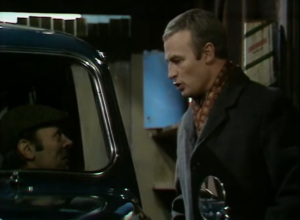
10. First Refusal (First broadcast 15th March 1972)
Written by Bill Craig. Directed by Jim Goddard.
Callan doesn’t just work as a great bit of drama, it also works as an interesting character study. The character of David Callan, the cynical, world-weary tough guy-slash-secret softy, is thrown into sharp relief against the other regulars (most notably Russell Hunter’s Lonely – more on him later).
A good example of this is snooty posh boy, Toby Meres (Anthony Valentine). Meres is a snorting old-school Etonian, who looks like he’d be more suited to getting squiffy at Royal Ascot. He’s so posh he probably has toilet rolls made out of £10 notes.
Inevitably, Callan and Meres are chalk and cheese. Meres’ gung-ho approach to his work contrasts with Callan’s more measured technique, causing enough fireworks to last a decade’s worth of Guy Fawkes night celebrations.
Pairing Callan and Meres on this assignment may not be fun for either, but dedicated audiences must have been intrigued to see the return of Toby after he went AWOL in the previous series. If this was made today, more would be made of this, but back then, the opening credits blew the surprise by including Valentine’s name in the opening titles.
Inevitably, while Meres has sneered and sparred his way through the episode with gusto, his sledgehammer tactics backfire. Thinking that a third-party broker called Kitzlinger (supposedly selling British agent names for a hefty sum of money) is about to reach for a gun, Meres gets there first by shooting him first. Except Kitzlinger was only reaching for a bottle of heartburn pills.
Somehow I don’t think they taught common sense at Eton.
9. Call Me Sir! (First broadcast 7th March 1972)
Written by Bill Craig. Directed by Bill Bain and Mike Vardy.
Like all good heroes – or anti-heroes – Callan is anti-establishment. He has no time for the petty concerns of upper echelon rules, regulations and red tape. So he’s in for a shocking quandary when he’s offered the post of Hunter – the head of his organisation called The Section.
(There’s more than one Hunter, incidentally – this sort of thing happens in spy telly, books and movies.)
Much as Callan would love to refuse the post, he’s effectively given no choice in the matter. This creates a change in the dynamics of the series, as another of his sparring partners, Cross (Patrick Mower) is promoted. Cross was a replacement for Meres after Toby went off to shoot grouse or something. Like Meres, Cross is an equally unlikeable git. Whereas his predecessor was a toffee-nosed toff, Cross is a ciggy-puffing, whisky-guzzling oik who puts brawn before brains. Inevitably, Callan has no truck with Cross, as the pair snarl their way through this episode’s plot.
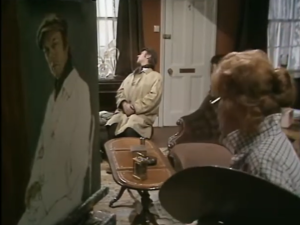
Which involves the closest that Callan has to a friend – the weaselly Lonely, superbly portrayed by Russell Hunter. He may have his flaws, but Lonely’s gullible vulnerability marks him out as the most relatable character. But that gullibility can lead him into hot water, such as when he’s selected by a double-crossing artist called Flo as the subject for her painting.
Cue inevitable fall-out that’s even bigger than Flo’s horrible glasses when Lonely finds out that he’s part of a plot to draw Callan into the sights of his enemies.

8. Breakout (First broadcast 10th June 1970)
Written by James Mitchell. Directed by Reginald Collin.
This would have made for a much better season finale. That was the original plan, but at the last minute, it was swapped with Amos Green Must Live.
It’s a scheduling lulu, as Breakout has far more pace and wit. The premise is a simple one – Callan is in charge of a plot to break KGB agent, Lubin (good guest turn from Garfield Morgan) out of jail and then frame his murder to make it look as if the spy’s paymasters are responsible. Time’s ticking as the KGB could get there first, whisking him off to safety.
With six months more prison sentence to serve, Lonely is inevitably roped into the plan, and this provides some more great character moments that Woodward and Hunter evidently relish. Callan’s eye-rolling reaction to Lonely’s patriotism is a joy.
Only the English could provide a final scene in which Callan is told by Hunter that he’s a likely KGB target… while swilling a cup of tea on a freezing beach.

7. A Village Called G (First broadcast 13th May 1970)
Written by James Mitchell. Directed by Mike Vardy.
Like all good dramas, Callan doesn’t concentrate on the main character. It gradually builds up a network of supporting players, who add much more to the bigger picture.
Liz (Lisa Langdon) originally started off a disembodied voice on a speaker phone before eventually appearing in person. The Section secretary is super efficient. She’s always punctual. She promptly responds to Hunter’s barked orders. She can doubtless type up memos, take phone calls and make a cuppa all at the same time.
Liz’s background is put centre stage in A Village Called G. While she may be likeable and friendly, even Liz has a darker side. It’s showcased in this excellent episode which starts out as a mystery of what’s happened to Liz after she doesn’t show up for work. Thinking that she’s either been kidnapped or worse – turned traitor – Hunter orders Callan and Liz’s bit on the side, Cross, to bring her back “in one piece, if possible”.
Turns out that Liz has her own personal vendetta against a war criminal who wiped out her Polish family. Having found the file on a Mr Sabovski, Liz has twigged that this is an alias for war criminal Klist.
Doctor Who fans will be amused to see two of the biggest hams come together in one episode. But while Joseph Furst (loony Zarroff in The Underwater Menace) refreshingly plays it straight as Klist, Graham Crowden (Soldeed in The Horns Of Nimon) ah… doesn’t as funky shaded, struck-off doctor, Groper.

6. Death Of A Hunter (First broadcast 16th April 1969)
Written by Michael Winder. Directed by Reginald Collin.
Death Of A Hunter was originally intended as a series finale. What the producers of Callan hadn’t banked on was the public backlash to the possible end of the series. With that in mind, two endings were originally filmed, with Callan at the mercy of Eton Rifle, Toby Meres. In the end, Callan lived to see another day, as two more series were made in brand spanking new colour.
This season finale does have all the hallmarks of a good series closer. Callan is put through the wringer, as he’s captured by the KGB and subsequently drugged and brainwashed, duped into thinking that Hunter is actually a double-crossing rotter. Sterling work from Edward Woodward. Luckily, he’d get to play his most celebrated part several times more in the next couple of years.

5. Let’s Kill Everybody (First broadcast 5th February 1969)
Written by Ray Jenkins. Directed by Robert Tronson.
Callan’s second season likes to pile on the emotional misery for the dour main man. Alarm bells start ringing when we find out that Callan has got himself a girlfriend. This isn’t the best timing for champagne and roses, as The Section learns that a shadowy foreign agent is targeting them one by one.
Talk about a date killer. Callan flat out asks his girlfriend, Jenny, if she’s a part-time assassin. It’s not the sort of thing you’d see on First Dates.
In fact, the culprit is Jenny’s tutor, one Dr Paula Goodman, who ends any notions of (admittedly unlikely) marital bliss by drugging her, dumping her in a canoe and then drowning her.
Another Valentine’s Day without any cards for Callan, then.
4. Call Me Enemy (First broadcast 10th May 1972)
Written by George Markstein. Directed by Bill Bain.
Much as I loathe the current trend of tiresome season arcs – or multiple season arcs in contemporary drama, Callan does throw up a worthy recurring adversary in the final season. TP McKenna’s slimy KGB agent Richmond is a suitably boo-hiss baddie for Callan to shout at.
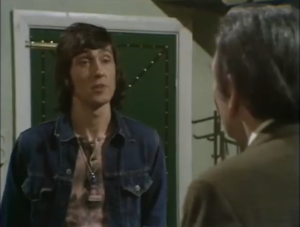
Fans of modern-day drama may start glancing at their iPhones if asked to sit through an episode of Callan. Call Me Enemy, when it comes down to it, is, for the most part, a talky two-hander between Callan and Richmond. It is peppered with occasional interludes from an incredulous Hunter spluttering in disbelief at the fashion sense of hippy communications man, Jarrow (Brian Croucher! AKA Borg. Or Travis II. Or Harry The Bastard).
But those who have a bit more patience will be rewarded with some sparkling dialogue from George Markstein, brought to life by two top-class actors. TP McKenna excels at this sort of role, and he proves to be the ideal fit for the manipulative, pompous Richmond. Not just content with filling Callan’s mind with plausible lies, Richmond positively revels in sneering at his working class background.
While Richmond escapes in a nicely ambiguous scene (would Callan really have joined him before Richmond knocked him out?), it’s not the last we’ll see of this evil snob.

3. I Never Wanted The Job (First broadcast 19th April 1972)
Written by John Kershaw. Directed by Jim Goddard.
An effective stew of whimsy and brutal visuals in which Lonely rues the day that he took The Section’s taxi driver job. On the one hand you’ve got Callan’s cold and a rare thaw between him and Toby in the light-hearted closing scenes. On the other, you’ve got the bloody murder of gangster Edward Dollar, which pulls no punches.
This episode features some classic banter between Callan and the hapless Lonely (who’s had the misfortune to witness Dollar’s demise), plus some credible villainy from William Marlowe. Think of what Mailer from Doctor Who’s Mind Of Evil would be like in the big wide world.
And on the subject of Pertwee-era Doctor Who, who else pops up in this episode, but John Levene!

2. A Man Like Me (First broadcast 24th May 1972)
Written by James Mitchell. Directed by Reginald Collin.
So this is how it actually ended up. Complete with explanation for the lightbulb.
A Man Like Me not only ties up the loose ends of the Richmond plot, it also wraps up the series in aptly ambiguous fashion. Incidentally, this wasn’t the complete full stop of the series – a movie would be made in 1974, and a one-off reunion episode called Wet Job surfaced in 1981 – but many fans regard this as the definitive last ride.
There’s unintentional fun to be had here with scenes involving computer nerd, Routledge (Peter Sallis in a cracking performance). These days, we take computers for granted. They’d be used to track rapscallions like Richmond in a flash. But back in 1972, great tin boxes were regarded as a novelty – and hoo boy, these boxes would need the combined entrants of The World’s Strongest Man to move them about. Routledge even gives his computer a pet name: EDNA (which stands for Electronic Distributed Numbers Assessor). It’s charmingly quaint, but in a sense, ahead of its time. Callan’s quip of humans becoming redundant resonates more than ever in these worrying AI times.
This finale has echoes of the potential final fling, Death Of A Hunter, with Callan undergoing some more capture, doping and psychological beating. But this time, it ends on a suitably downbeat note – even if Callan (reluctantly) kills Richmond and saves the day, he still ends up a pariah. Hunter informs him that he will break him, but Callan says that he’s a broken man anyway.
1. The Worst Soldier I Ever Saw (First broadcast 2nd April 1969)
Written by James Mitchell. Directed by Robert Tronson.
Callan is one of those dramas to be affected by the mass episode purge in the ’70s. Because TV was only designed to be watched once or sometimes, twice, master tapes were deemed to be of zero value and unceremoniously destroyed.
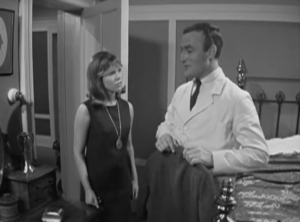
Compared to other stablemates, Callan didn’t fare too badly, with only 10 episodes out of 44 missing. The Worst Soldier I Ever Saw is an interesting one in that the original master tape no longer exists. However, a complete studio recording of the episode does remain in the archives. By the by, the recording date was well in advance of transmission, going before the cameras on 2nd July 1968 – a full nine months before it was on the box.
So, those clever folks at Network DVD managed to fashion a complete episode from the existing footage. It was worth the exercise, as The Worst Soldier I Ever Saw is Callan at its best. What makes the series much more than tedious spy fodder is the personal backgrounds and motivations of characters.
While The Section are after hoity toity Brigadier Pringle (Allan Cuthbertson) because the Sultan of Abu Tafa wants him to lead his army, Callan has more of a personal interest. Pringle was Callan’s commanding officer, and also the reason that he was discharged from the army. When he confronts his old enemy, Pringle sneers that Callan was “too much of an individualist” – which perfectly sums up the series’ anti-establishment credo.
Good stuff overall, featuring Anthony Valentine amusingly attempting a working class accent and a baby Tessa Wyatt as Pringle’s idealistic daughter.
(Screengrabs credited to ABC Weekend Television/Thames Television)
