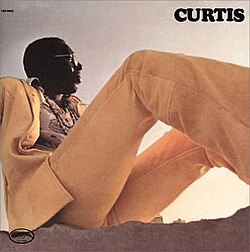
I’ve moved on up towards my destination of 1970 – and a track-by-track look at Curtis Mayfield’s classic debut album!
(Don’t Worry) If There’s A Hell Below, We’re All Going To Go
Ushering in his solo debut, Curtis Mayfield is quick to emphasise that this is a tonal shift from the lighter pop soul of his previous group, The Impressions. Over a grungy bass guitar, a female voice intones solemnly from the Book of Revelations, just before Curtis himself announces that everyone’s gonna go to hell below. And with a piercing scream, the track launches proper – an extended hard soul funk workout that marries socially-conscious lyrics to a dance beat that’s impossible to resist.
I’ve previously written about albums that apparently have some kind of eerie second sight insight into the future. Curtis Mayfield’s debut is no exception. It may have been released in September 1970, but a quick read of the lyrics suggest that nothing’s changed in September 2026. Choice references include “political actors”; “the law that’s partly flaw”; and “cat calling, love balling, fussing and a-cussing” before proclaiming that “top billing now is killing, for peace, no one is willing.” Today’s social circumstances may have been rearranged, but the subject matter is even more on-point than ever before.
But like the rest of the album, this isn’t one long, severe, finger-wagging scold. Mayfield’s impeccable grasp of pop sensibilities means that you can dance and hum along, while you ponder on how easily everything’s going to hell in a hand basket. Musically, it’s a curious mesh, with the harsh orchestral sounds paired up with strident, conga-driven drumbeats and fuzzy bass – but it’s intertwined so well that you don’t give it a second thought.
One of the three longer tracks on the album, originally this one whizzed by a lot quicker when I first bought it. My vinyl copy would jump like a blue-arsed fly on a hot plate. Fortunately, my current pristine CD replacement means that I can enjoy this funky doom and gloom in all its intended glory.
The Other Side Of Town
I love the sound of the harp, always have done, always will. There’s something about that ethereal wash of plucked and strummed chords that takes me away to another far-distant place.
It’s one of many reasons why Curtis’ debut continues to get so much airplay here at Bensalhia Towers. The dramatic harp flourish welcomes in this more sedate second track – well, I say sedate. The music is – a slower, brassy vibe – but the lyrics pack as much punch as the first track, a quietly furious diatribe about the difference between rich and poor. The protagonist has a sister who is hungry just for a piece of bread to eat, while his brother’s hand-me-down shoes are worn right through. “Depression is part of my mind,” laments Curtis in that gently fragile soprano. “The sun never shines on the other side of town”.
The instrumental arrangements are inspired, as the downtrodden lower brass is instantly followed up by the harsher, higher register trumpet chorus. Entirely self-written, Mayfield put as much thought and care into the musical structures as he did his evocative lyrical protests.
The Makings Of You
Not all of Curtis is about shaking a fist at the world. Indeed, Mayfield is more than capable of celebrating the beauty that life can offer. The Makings Of You is a good illustration of this softer approach, ironing out the rough edges to create a quietly addictive ballad which again is immaculately arranged with orchestra and brass.
Whereas some would come up with a million clichéd platitudes, Curtis does what most of us would do when declaring love. He gets tongue tied and finds it “almost impossible” to recite “the makings of you”. Not even a dozen red roses snaffled from the nearest florist shop can express the love that he has.
A sweet love song that doesn’t fall into the usual trappings of corn. Actually, as the track goes on, Curtis is wishing that everybody could take a leaf out of his book. “The love of all mankind, should reflect some sign of these words I’ve tried to recite.” There you go, folks – make love, not war.
And scuttle off to the nearest petrol station to buy a dozen red roses today!
We The People Who Are Darker Than Blue
The second of three extended jams on the album, Side One’s closer checks in at just over six minutes. It tricks you into thinking that it’s a quietly majestic ballad before exploding into that mad rush of percussion and brass in the middle part. And just as you’ve prepared to bop along to this horn-blaring madness, the track settles down again back to its original stately ponder.
An anti-racism paean, We The People Who Are Darker Than Blue balances biting commentary with a plea for universal harmony (“I know we’ve all got problems, That’s why I’m here to say, Keep peace with me and I with you”). There can be a fine line between moral messaging and clumsy sermonising, but Mayfield skilfully avoids these trappings to present a timeless, evocative classic.
Move On Up
The headliner of the album, Move On Up was heavily chopped up and edited to become the hit single in the UK. It’s one of those tracks that you think was a super hit because of its regular airplay and fond memories, but in fact, it just missed the Top 10, making Number 12 in the Summer of 1971. Curtis’ debut album could only manage one week at Number 30 in March 1971, but in the US, fared better at Number 19 on the Billboard 200.
The full-length album version is the longest on this collection at eight and three quarter minutes, but far from dragging, it breezes by in a flash. Typically, I had to wait until I later got the CD to enjoy it in all its glory because my original vinyl copy kept getting stuck. I think I must have originally got my records from the local rubbish tip.
Despite its prodigious length, it never gets boring, rattling along with that instantly recognisable brassy riff. It also employs every trick in the book to keep it interesting, including our old friend, the false ending dupe; a cracking saxophone solo; and Henry Gibson walloping the congas with such force they’re in danger of being chopped in two.
A true classic, and one that belies its impossible 56 years of age.
Miss Black America
Miss Black America starts with what sounds like cheesy cocktail bar lounge music, as some laidback, jazzy piano chords tinkle in the background – over which a dad asks his young daughter what she wants to be when she grows up. To which she announces that she wants to be Miss Black America.
As the jazzy piano melts away, the brass kicks in to add an extra touch of empowerment to this celebratory anthem. The Miss Black America pageant had been introduced in 1968 and this ode proudly salutes it while never stepping into OTT bombast: “Sisters, we’re all so very proud, Of that natural look we see among the crowd, Worldwide admiration from nation to nation.”
Wild And Free
The dramatic brass blaring instantly parps you in the eardrums as this penultimate cut attempts and succeeds to express Curtis’ wish for a peaceful, harmonious but empowering globe.
The brassy arrangement is forceful but never brash, working in tune with Mayfield’s lyrics that play to all bases. Peace throughout the world? Check. Freedom to live your life how you wish? Check. Power to the people? Wolfie.
And of course, a couple of words to those set-in-their-ways old fogies: “Setting down the old crew, Bringing in the brand new”. Hopefully, not too many pairs of false teeth were spluttered across the room on hearing this.
The sad tragedy was that Mayfield died at the young age of 57. In 1990, he was involved in a horrific stage accident that left him paralysed from the neck down. However, he still continued to record – including the acclaimed New World Order – but tragically, his health declined, and on Boxing Day 1999, passed away from type 2 diabetes complications.
Give It Up
While a good portion of the Curtis album deals with political and social concerns, it ends on a poignantly personal note. Give It Up’s protagonist has a wife and kids, but he’s realised that the love has gone from the relationship.
In keeping with the rest of the album, the musical score is perfection. The quieter harp-led verses offer melancholy reflection on what went wrong (although, is an interest in astrology really that big a reason to break up a marriage?), while the brassy stings of the chorus ramp up the dejection. Actually, this may be the best of the arrangements on the album, which is up against some pretty stiff competition.
(Cover design credited to Bob Cato)
If you liked this article, you might like some of my other books which are available to buy at Amazon:
Amazon.co.uk: JOHN BENSALHIA: books, biography, latest update
