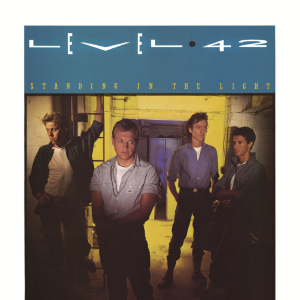
Living up Level 42’s breakthrough Top 10 album, 43 years on. Is it a crazy notion? Or forward motion?
Micro Kid
If, in 1983, you would have told nine-year-old me that in 43 years time, you’d be able to fit a computer into your pocket, I would have laughed in your face.
Much as the way in which modern day cool kids laugh at how us old fogeys used to dream of great big clunky heaps of metal and plastic. Computers back then were a rarity. A luxury. Like the humble video recorder, I used to wish that somehow, I’d get my hands on a brand new computer. Whereas these days, we take all of that for granted. You don’t have to break the Bank of England to get a half-decent laptop (on which I’m typing up this latest bit of drivel). Your average iPhone has everything you could want at your fingertips – news, social media, games, videos… the lot.
Which makes Micro Kid a relic of its time. Even the video has a pudding bowl kid checking out a 100-ton jumble of keyboard and screen, which seems to contain Level 42 in its innards. It even includes those quaint micro circuit video effects and laserbeams, which back then, were shorthand for modern tech.
A decent launch for the album, but it didn’t do quite as well as its predecessor, only making Number 37 in the charts. That dreaded third single syndrome struck in Autumn ’83 – by which point, most Level 42 fans already had the parent album. On its own terms, it’s a neat bit of dancey funk – complete with a then-trendy Vocoder instrumental break. It’s a bit like Herbie Hancock’s Sunlight album if you’ve ever heard it – and if you haven’t, check it out!
The Sun Goes Down (Living It Up)
The big hit and one of the most vital in Level 42’s back catalogue. Maybe it was a case of right place, right time, as the band released it in the hot Summer of 1983. It was their first Top 10 hit, and is still fondly remembered to this day.
Unusually, Mike ‘Son Of David Family Fortunes Theme Composer’ Lindup takes the lead, with Mark King popping up in the interludes – whereas it’s usually the other way round. The Sun Goes Down is also the most danceable cut that Level 42 have attempted – most likely down to the influence of producers Larry Dunn and Verdine White from Earth, Wind And Fire. A fair number of tracks from Standing In The Light have their roots in classic late ’70s dance, a trend that was still being mined for inspiration by the mid-’80s.
It was accompanied by a promo video that sees the band paying a visit to what looks like the local quarry, the sort you’d see in your average Doctor Who yarn. All of that grit and sand can’t have been good for the band’s musical instruments. King even buries his bass in the sand at the end!
Out Of Sight, Out Of Mind
I don’t know why this wasn’t a hit. It should have been. It’s just as good as the stuff from the previous LP, The Pursuit Of Accidents. I suppose it came too soon on the back of the band’s previous hit, The Chinese Way – just missing the Top 40 by a whisker at Number 41.
Possibly, some might have thought this was more of an album track than a conventional hit. It has quite an odd structure with a chorus that takes longer than your average centrepoint. Plus, and I’m not sure if the single is the same mix as the promo video – the vocal isn’t as strong as the album version. On the LP, it sounds like Mark King’s vocals have been double tracked, as they have that slightly strange echoey quality. Whereas on the video, it sounds more like a demo take, and not quite as good.
Or maybe fans couldn’t quite work out what was going on in the video, as King slumps miserably on a freezing cold beach with his belongings in a suitcase – in between paying a visit to his doppelganger, who’s performing with the band in a musty old village hall. And at the end, he’s faded out of existence from one touch of a Scottish Widow.
Dance On Heavy Weather
I would dance on heavy weather to this – except that my vinyl copy sticks repeatedly throughout. It’s like dancing to a malfunctioning sandwich toaster.
The previous track was the sole production contribution from Wally Badarou, so for this and the rest of the album, it’s back to the dance soul sensibilities of White and Dunn. The pounding rhythm drives the track forwards and Phil Gould goes crazy at the end, walloping those drums with the might of a wrecking ball.
If there is one criticism, it’s the lyrics – which are of the clichéd “can’t we all just get along and dance our troubles away?” kind, the sort that crassly rhymes disillusion with solution. You can picture the band frantically leafing through a hefty dictionary, looking for the right word to rhyme with solution. But as a guaranteed dancefloor filler, Dance On Heavy Weather takes control.
A Pharaoh’s Dream (Of Endless Time)
This has more in common with the band’s earlier days. Dare I think it, some of the stuff on their Strategy and eponymous 1981 albums sound quite proggy in places – as if they extracted the themes from a Genesis or Yes LP and married them off to a groovable beat.
They’re a funny mix, Level 42. As well as those earlier prog-style leanings in their lyrics, musically they encompass jazz, funk, soul, rock and pop. They offer something for everyone, which is why they became so popular – especially hitting their stride in the middle part of the 1980s. Standing In The Light wasn’t quite as commercially successful as future LPs, World Machine or Running In The Family, but it is the home of quirky delights such as this one.
And for someone who’s always been fascinated by Egyptology, it’s a nice bonus.
Standing In The Light
Much of Level 42’s output – while great to bop along to – also provide some food for thought. Especially when it comes to non-conformity and championing individuality.
The enigmatic title track is a good example of this, reflecting on a schoolboy in ’68 who refuses to blithely go along with what teacher says. Instead of being a cog in the system wheel, he’s got ambitions on music. His whole life is his music, which he uses as a meditation and to blot out everyone’s scepticism which is mentioned in the final verse: “They called his dream a fantasy…”
Whether or not it’s autobiographical is a bit of a poser. That one-size-fits-all approach of teaching doesn’t square with kids who have a very clear vision of where they want to be in the future. And for youngsters who had their hearts set on a music career, an old school teacher’s scorn would cast a long shadow over that potential genius.
I Want Eyes
Standing In The Light does feature a larger quotient of social commentary, a good example being the evocative ballad, I Want Eyes.
The enigmatic title is said to have come from the name of a picture that Phil Gould’s mum had of statues made by blind Korean orphans. The concept and the title spurred Gould on to reflect on the horrors of war, and how no one has learnt a single lesson (43 years later, nothing’s changed).
The odd hokey phrase (“I just can’t live on Planet Hope and watch the world go up in smoke” is a smidge clunky) aside, this is a suitably bleak expression of the futility and devastation left by war (“I saw it on the news today, a thousand lives just blown away” and that’s only in the first verse). Mark King turns in one of his most emotional vocal performances, and as a totally irrelevant aside, I also love the strange, muddy synthesiser solo in the middle break.
People
This is Mike Lindup’s baby all the way, and ironically, it’s one of the best on the album. A Summery bit of jazz pop on the surface, but underneath, a weary bafflement at some people’s superficial, shallow lives.
I really like the observations that Lindup makes and found myself nodding in agreement with pretty much all of them. How youngsters live their lives in carefree, happy-go-lucky and then gradually morph into snotty social climbers who are too obsessed with material possessions, vintage bottles of plonk and trash on the telly. “Don’t believe words when they’re superficial,” suggests Mike. “Don’t put your trust in values artificial.”
Like all good Level 42 songs, it’s a good toe tapper, but on another level, it gives the brain something to chew over at the same time. Lindup’s breezy vocals are a tonic, and his solo contribution is a definite highlight.
The Machine Stops
E.M. Forster’s short story from 1909, The Machine Stops wasn’t just the inspiration for this album stopper, but also a still-relevant warning about over-reliance on technology. It depicts a world which has been destroyed by excessive climate change and polluted air, forcing its inhabitants to live underground with every aspect of their lives determined by the supreme ruler, The Machine.
Sound familiar?
Standing In The Light may have started out with a dated concept of computer awe, but it’s gradually come to an end with ideas that still ring true. Wars. Superficiality. Materialism. Climate troubles. Pollution. Over-reliance on technology. The band must have either built their own time machine or had access to a foolproof crystal ball.
Which is why this album – despite the odd turn of talk or farty keyboard sound – has aged well. Dunn’s and White’s production lends it a trendy gloss, the playing and singing are superlative on all points, and it’s great to bop along to while you’re typing out meaningless gibberish. But for now, this writing machine stops.
Until the next time!
(Cover design credited to Neville Brody and Sheila Rock)
If you liked this article, you might like some of my other books which are available to buy at Amazon:
Amazon.co.uk: JOHN BENSALHIA: books, biography, latest update